JAPANESE


- HOME
- Guitars/Basses/Stringed Instruments
- Classical/Flamenco Guitars
- Classic Guitars
- Jose Ramirez III [ホセ・ラミレス 3世] 1A No.2685 MM Stamp 1968年 Vintage 1645026 Jose Ramirez III [ホセ・ラミレス 3世]【楽器検索|Jギター】
Jose Ramirez III [ホセ・ラミレス 3世] 1A No.2685 MM Stamp



Product Description
Neck:Cedro
Fingerboard:Ebony
Finish(Top):Polyurethan
Finish(Back & Sides):Polyurethan
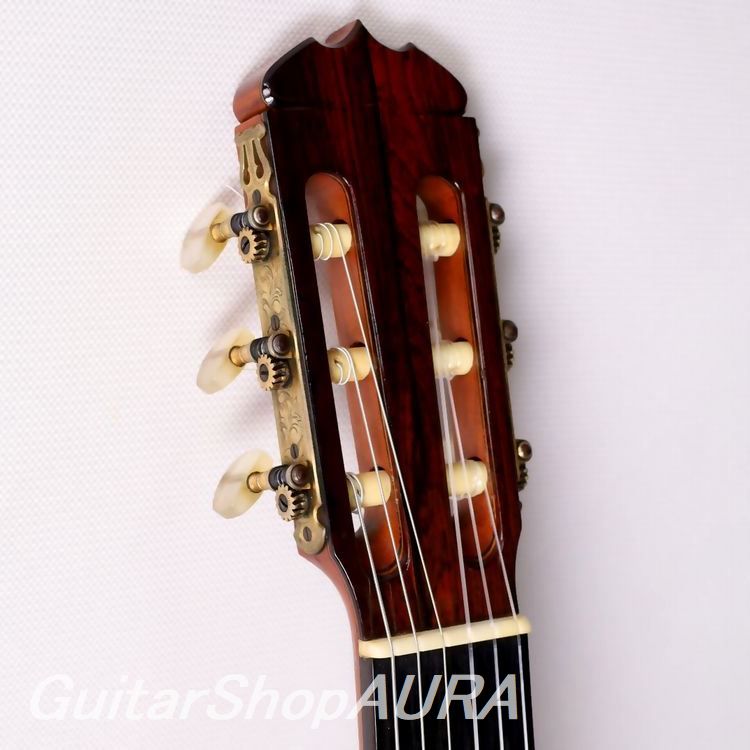
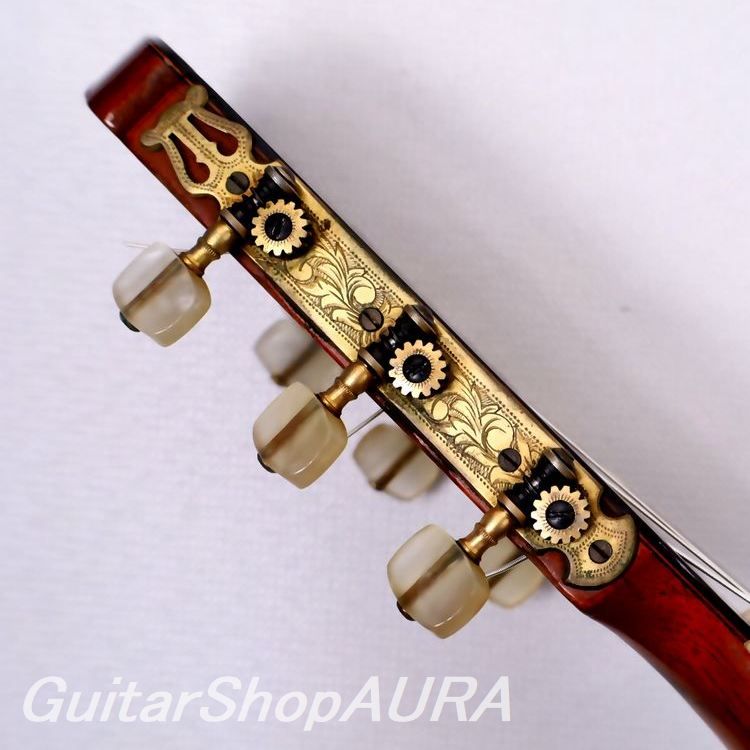
Tuning Machines:Fustero
String Height(1st):3.2mm
String Height(6th):4.3mm
[Maker Information]
José Ramírez is a prestigious classical guitar brand based in Madrid, Spain. From the eras of José Ramírez I (1858–1923) and II (1885–1957) through to the present-day José Ramírez V, the name has remained one of the most important in the history of Spanish guitar making for over a century. The workshop continues to serve the international guitar market today.
The period of José Ramírez III (1922–1995) is particularly highly regarded and is often referred to as the golden age of the “Ramírez dynasty.” Guitars made during this era were innovative yet widely popular, captivating guitarists and enthusiasts around the world.
From the late 1950s through the 1960s, distinguished makers such as Paulino Bernabé and Mariano Tezanos worked as workshop foremen. During this period, Ramírez established a unique workshop system that enabled the production of high-quality handcrafted instruments on a larger scale while maintaining consistently high standards.
In 1964, the company introduced its flagship Model 1A. This groundbreaking instrument featured a Western Red Cedar soundboard in place of the traditional spruce, a deeper body, double-layered sides with cypress on the inside, and an extended 664 mm scale length instead of the conventional 650 mm. The traditional shellac finish was also replaced with a urea-resin finish, greatly improving durability. These innovations, together with its distinctive sweet, lustrous tone, known as the “Ramírez sound,” and its striking deep-red finish, gave the Model 1A unprecedented popularity in the history of the classical guitar.
Ramírez III's innovations were remarkably original, both in terms of instrument design and marketing strategy, while perfectly responding to the demands of the time. His influence on subsequent guitar making was immense, and his instruments helped define the image of the modern classical guitar.
His son, José Ramírez IV (1953–2000), began working as an apprentice in his father's workshop at the age of 18 and was officially recognized as a guitar maker in 1977. In 1988, he and his sister Amalia took over the management of the brand. While preserving his father's philosophy of guitar making, he expanded the company's market presence through a more contemporary business strategy, including the introduction of Estudio models and the adoption of the standard 650 mm scale length. Sadly, he passed away in 2000, just five years after his father.
Following his brother's death, Amalia continued his legacy, focusing on flexible product development, production supervision, and the training of his two children, Cristina and José Enrique, who joined the workshop in 2006.
Today, the two siblings have officially succeeded the family business. Cristina, who also has qualifications in graphic design and audio engineering, oversees marketing and related projects, while José Enrique is responsible for guitar making and workshop management.
The instruments produced during the eras of Ramírez III and IV remain highly sought after, their sound forever associated with the legendary performances of Andrés Segovia. In particular, guitars made during the 1960s, when the initials of the individual master craftsman were stamped inside each instrument, continue to be cherished by enthusiasts of this remarkable period.
[Instrument Information]
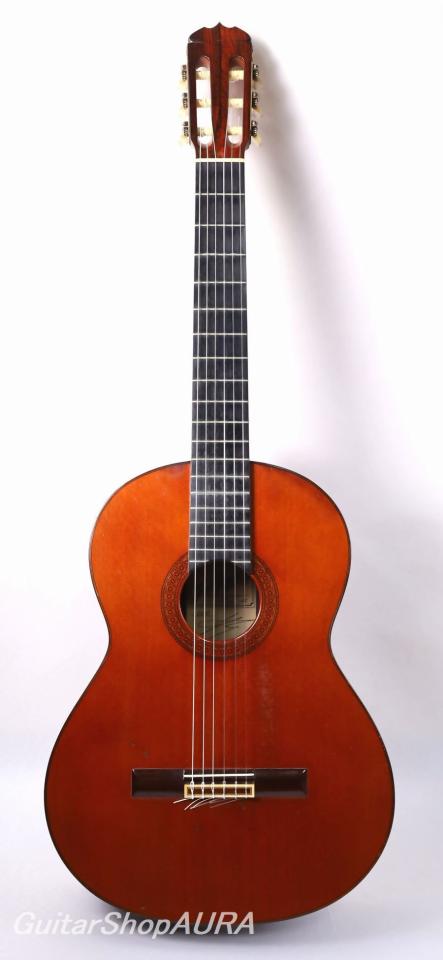
José Ramírez Model 1A, MM Stamp, 1968, No. 2685 – Used
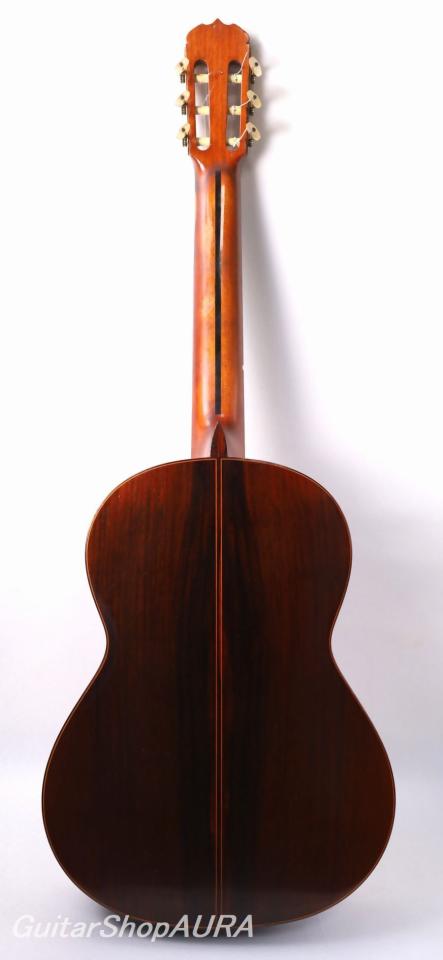
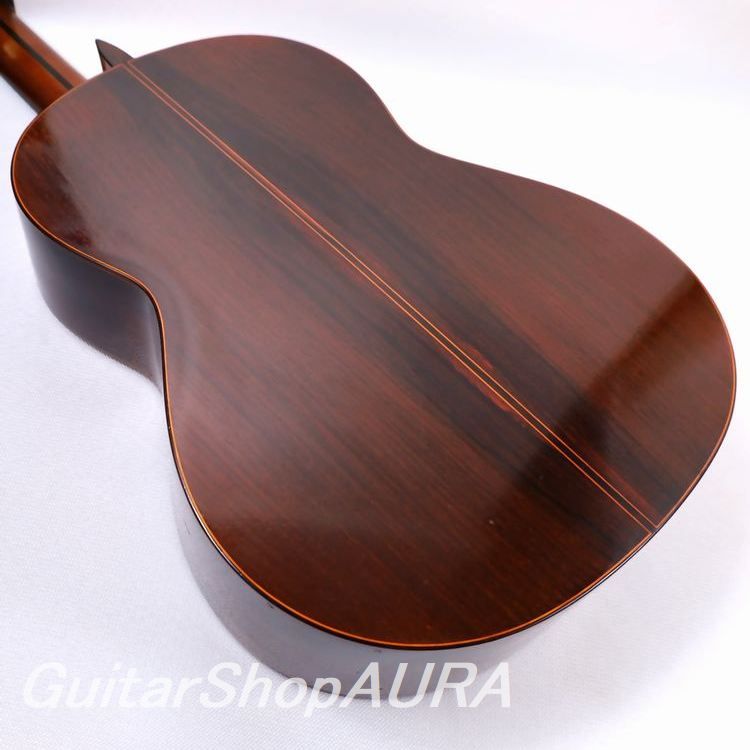
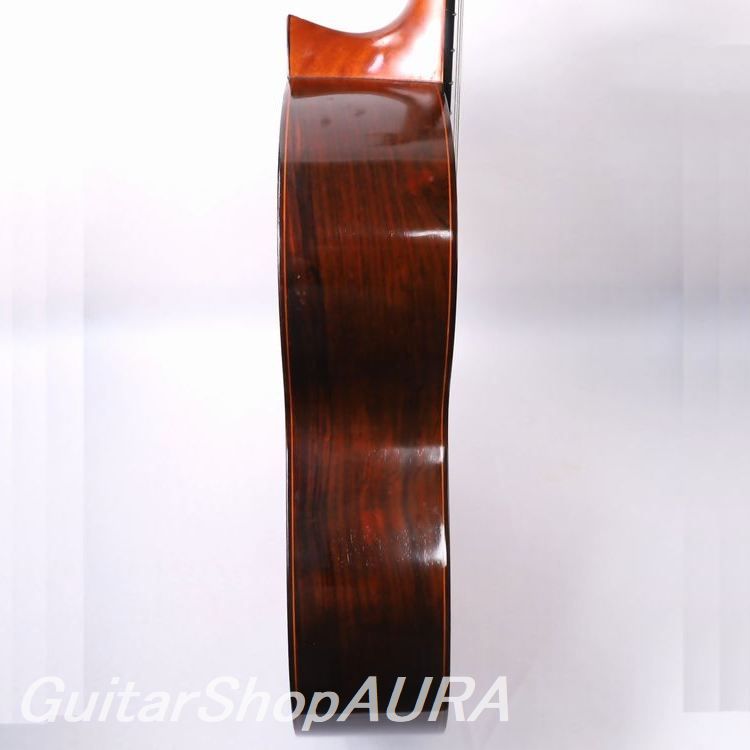
This instrument features a Western Red Cedar soundboard and solid Central American rosewood back and sides.
The Model 1A is the flagship instrument that established the reputation and identity of the Ramírez brand. This particular example dates from the late 1960s, one of the most highly regarded periods in the model's history.
During the era of José Ramírez III, the initials of the master craftsman responsible for each instrument were stamped inside the body, near the neck block. The “MM” stamp on this guitar identifies its maker as Miguel Malo Martínez. In the 1970s, this initial-based stamping system was discontinued and replaced with numerical identification. Miguel Malo was subsequently assigned the number “1,” immediately following José Ramírez IV, who was designated “0.”
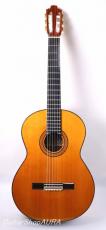
The combination of the deep brown hues of the cedar soundboard and the dark, wild grain of the Central American rosewood, enhanced by the distinctive deep-red finish, gives this guitar an unmistakable presence and elegance. Its appearance proudly embodies the unmistakable identity of the Ramírez tradition.
Acoustically, the instrument employs the distinctive Ramírez design philosophy of balancing sound pressure across the entire register, allowing the upper notes to emerge naturally and prominently. Its powerful, richly textured voice extends all the way to the highest frets, carrying a deeply romantic character and an exceptionally vocal quality.
The attack is percussive yet possesses a satisfying degree of elasticity. Rather than dispersing indiscriminately, the sound maintains remarkable density and sustain. There is tremendous power, yet also excellent clarity and definition. The instrument creates strong musical momentum while preserving an organic melodic line. Both the principal melody and its accompanying counterpoint emerge with impressive clarity and balance, demonstrating its ability to combine lyrical expression with excellent musical articulation.
Although the large body dimensions and string-height specifications of the classical Model 1A, produced between 1964 and 1986, might initially suggest a demanding playing experience, Ramírez achieved an exceptionally refined level of playability that largely dispels this impression.
This is particularly evident in the neck-to-body angle and the carefully designed fingerboard inclination. The fingerboard is set at a pronounced angle and is subtly radiused across its surface. As a result, the string height decreases progressively towards the higher frets, creating a comfortable left-hand feel. Combined with the previously mentioned acoustic design, which naturally brings the upper register forward, the instrument achieves a remarkable harmony between physical playing mechanics and musical expression.
This ingenious configuration helps reduce the physical demands normally associated with the instrument's larger dimensions. The successful integration of acoustic performance and playability is a remarkable achievement, demonstrating the exceptional design and development capabilities of the Ramírez workshop.
The soundboard bracing follows the characteristic Model 1A configuration. Two harmonic bars are positioned above and below the soundhole, on the neck and bridge sides respectively. A third diagonal bar crosses the lower harmonic bar directly beneath the soundhole, connecting the upper bass side to the lower treble side. Each of these three bars has a small opening at its bass-side end, approximately 1 mm high and 5 cm long.
A thin circular reinforcement plate surrounds the soundhole, reinforcing the area beneath the rosette. The lower soundboard features six fan braces, arranged with two on the treble side and three on the bass side of the central brace. Two closing bars form an inverted V-shape, supporting the lower ends of the fan braces. A thin reinforcement plate is also fitted beneath the bridge. The resonance is tuned to G–G#.
Condition and Specifications
There is no history of major repairs, such as cracks or structural modifications. However, the instrument shows signs of age and use consistent with its vintage.
The soundboard exhibits finish wear, uneven coloration and rubbing marks along the shoulders on either side of the fingerboard, caused by playing. There are concentrated playing marks in the treble-side area extending from the soundhole towards the bridge, together with various small dents and impact marks across the soundboard. There are also string marks below the bridge.
The back and sides remain in generally attractive condition, with relatively few scratches. Some finish wear is visible around the treble-side waist, resulting from contact with the player's knee.
The back of the neck shows some unevenness and discoloration in the finish, as well as areas of finish loss caused by fingernails around the third and fifth strings.
The neck is straight and in good condition, with no noticeable warping. The frets show only slight wear and remain within an appropriate range.
The neck has a slim, flat D-shaped profile, providing a surprisingly compact and comfortable grip considering the instrument's overall dimensions.
String Height: 3.2 mm / 4.3 mm (1st / 6th string, 12th fret)
Remaining Saddle Height: 1.0 mm
Tuners: Original-style Spanish Fustero tuners, currently functioning properly
Body Weight: 1.65 kg
Resonance: G–G#
A remarkable late-1960s Model 1A, crafted by master builder Miguel Malo Martínez, representing one of the most celebrated periods in the history of the Ramírez workshop.
Detailed Information
| 商品名 | Jose Ramirez III [ホセ・ラミレス 3世] 1A No.2685 MM Stamp |
|---|---|
| Product ID | 1645026 |
| Instrument Category | Guitars/Basses/Stringed Instruments > Classical/Flamenco Guitars > Classic Guitars |
| Brand | Jose Ramirez III [ホセ・ラミレス 3世] |
| Model Number / Model | 1A No.2685 MM Stamp |
| Instrument Classification | Vintage |
| Year | 1968Year |
| Condition | 3+[EX] |
| Top Material | Cedar |
| Side and Back Material | 中南米ローズウッド |
| Colors | Natural/Wood Grain |
| Country of Manufacture | Spain |
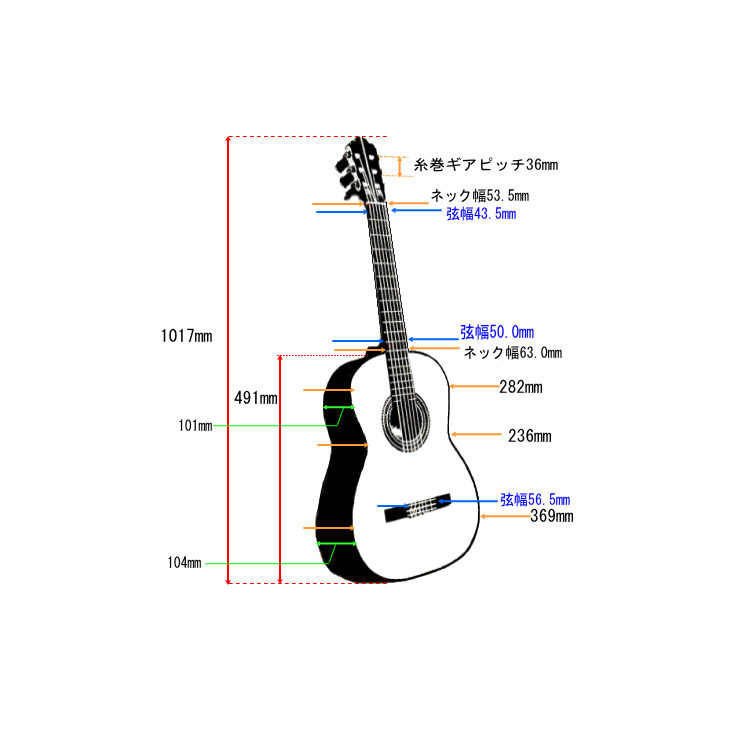
| String Length | 664mm |
| Case | Hard Case |
| Accessories | クロス |
| Release Date | 2026/11/02 |
| Update Date | 2026/11/02 |
Guitar Shop AURA

| Street Address | 〒110-0004 2F Azul Ueno, 3-3-5 Shitaya, Taito-ku, Tokyo 110-0004, JAPAN |
|---|---|
| Access | 5 minutes walk from Exit No.3 or No.4 of Iriya Station on Subway(Hibiya Line) or 10 minutes walk from South Exit of Uguisudani Station on JR Yamanote Line. |
| TEL / FAX | TEL:+81-(0)3-3876-7207 / FAX:03-3876-7206 |
| Business Hours / Regular Holiday | Eleven am to seven pm. / Wednesday are closed. |
| Home Page | http://www.guitarra.jp/top_e/ |
| Product Type | New, Used, Vintage |
| Product Category | Acoustic Guitars/Electric Acoustic Guitars, Classical/Flamenco Guitars, Accessories, Other Instruments, CD/DVD/Books/Sheet Music/Teaching Material |
| Supported Services / Facilities |
|
| J-Guitar Payment |
| Store Name | Guitar Shop AURA |
|---|---|
| Company Name | AURA Co., Ltd. |
| Location | 2F Azul Ueno, 3-3-5 Shitaya, Taito-ku, Tokyo 110-0004, JAPAN |
| Mail Address | [email protected] |
| Business Hours | Eleven am to seven pm. |
| Seller | |
|---|---|
| Representative Or Responsible Person | |
| Location | - 0 |
| Phone Number | -- |
| Selling Price | |
| Fees other than sale price required | |
| Payment method and time period | |
| Delivery Period | |
| Application Period申込み有効期限 | |
| Guarantee | |
| Guarantee ・ Return ・ Cancel | |
| Sale quantity limit and other special conditions |
| Name | 株式会社アウラ |
|---|---|
| Public safety commissions | 東京都公安委員会 |
| Permission Number | 第306619505019号 |
委託販売、買取、下取りのお申し込みは随時受け付けております。
現役の手工製作家によるメンテナンスチェックを実施し、楽器の状態を確認させて頂き正確な査定を致します。
大切な楽器を、「安心」と共に次のユーザーへと引き継ぐことを心掛けています。

確かな技術で、楽器の故障状況を的確に把握し、また、隠れた故障、潜在的な故障を見逃すことなく、適切な修理方法をご提案致します。
深刻な故障でもあきらめる前にまずはご相談下さい。
割れ、はがれ、傷等の破損や故障の補修。音質改善のためのナットとサドルの調整。
弾き心地改良のためのネック反り補正や、弦高、弦幅等を奏者に合わせるフィッティング調整。
更に再塗装、塗り重ね、フレットや糸巻きの調整や交換等の経年劣化に対しての補修、修理まで専門家の知識と技で、あらゆる問題点に関してのご相談、見積もり、リペアまで責任を持って承ります。担当制で木曜・土曜・日曜に各製作家がギターショップアウラに常駐しております。
お困りのことが御座いましたらお気軽に電話でご相談ください。
また、各担当製作家は、スペイン伝統工法に忠実に則り楽器を製作している現役製作家。
使用材からネック幅、弦幅、弦長などディテールを細かく指定出来るオーダーメイドについても製作家と直接ご相談頂けます。
名工から譲り受けた貴重材を使用するプレミアムオーダーメイドも受け付けております。


東京都内に、上野入谷・秋葉原・学芸大学・池袋の5教室を展開している「アウラ音楽院」。クラシックギター、フラメンコギターのみならず、ウクレレ、エレキギター、マンドリン、ポルトガルギターなど・・それぞれの講師達が得意とする分野の歴史と伝統の中で培われた技術を、自然と身に付けて行く事が出来ます。ギター初心者からプロ志望の方まで、課題や目的が違うひとりひとりとじっくり向き合い、講師と一緒に夢の実現に向けて上達を目指せる教室です。
コンサート活動やCD発売など活躍中の現役のプロミュージシャンや、指導経験豊富なプロ講師が多数講師として在籍。ギター専門店アウラとして、自信を持っておすすめできる講師陣で皆様をお迎えしています。
また、小さなお子様でも続けやすいキッズコース、お友達や家族とのペアレッスンなど多様なご要望に対応しており、「長く続けやすい」と皆様にご支持いただいております。
New instruments from this store
To stock list

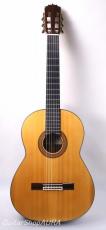
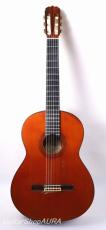
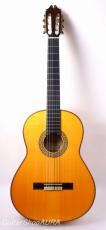
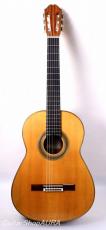

Daisuke Kuriyama [栗山 大輔] Class 80 model Santos Hernandez No.133